
Pole Barns vs Timber Frame Barns: Which Is Better for Your Property
If you’re planning a new barn, you’ve probably wondered: pole barn or timber frame barn?
Both can store equipment, shelter animals, or even host events.
But they’re not built the same. And those construction differences affect strength, cost, appearance, and the building's lifespan.
At Tuscarora Timber Frame, heritage and innovation are at our core. Our seasoned artisans and innovative designers honor the generations of those who honed the craft before us, and we reflect that in the work we do for our clients. But we also want to ensure we are the right fit for you—this guide breaks it down in plain language so you can decide what works for your land, budget, and long-term plans—whether you’re a homeowner, farmer, or builder.
Let’s get started!






TL;DR - Pole Barns vs Timber Frame Barns
- Pole Barns are ideal for a simple, covered space, a tight budget, and fast construction, prioritizing function over aesthetics.
- Timber Frame Barns are better for aesthetic appeal, flexible use (e.g., event space, barn home), and long-term/generational value.
- Cost: Pole barns are almost always cheaper upfront because they use fewer materials and simpler foundations.
- Longevity/Durability: Timber frame structures can last for centuries and offer better fire performance, while pole barns may have a shorter lifespan, especially if posts are buried in the ground.
The summary is a good foundation for basic knowledge of timber frame vs. post-frame construction. For more in-depth information, keep reading!
Structural Differences Between Pole Barns and Timber Frame Barns
Let’s start with how each one stands up.
What is a pole barn?
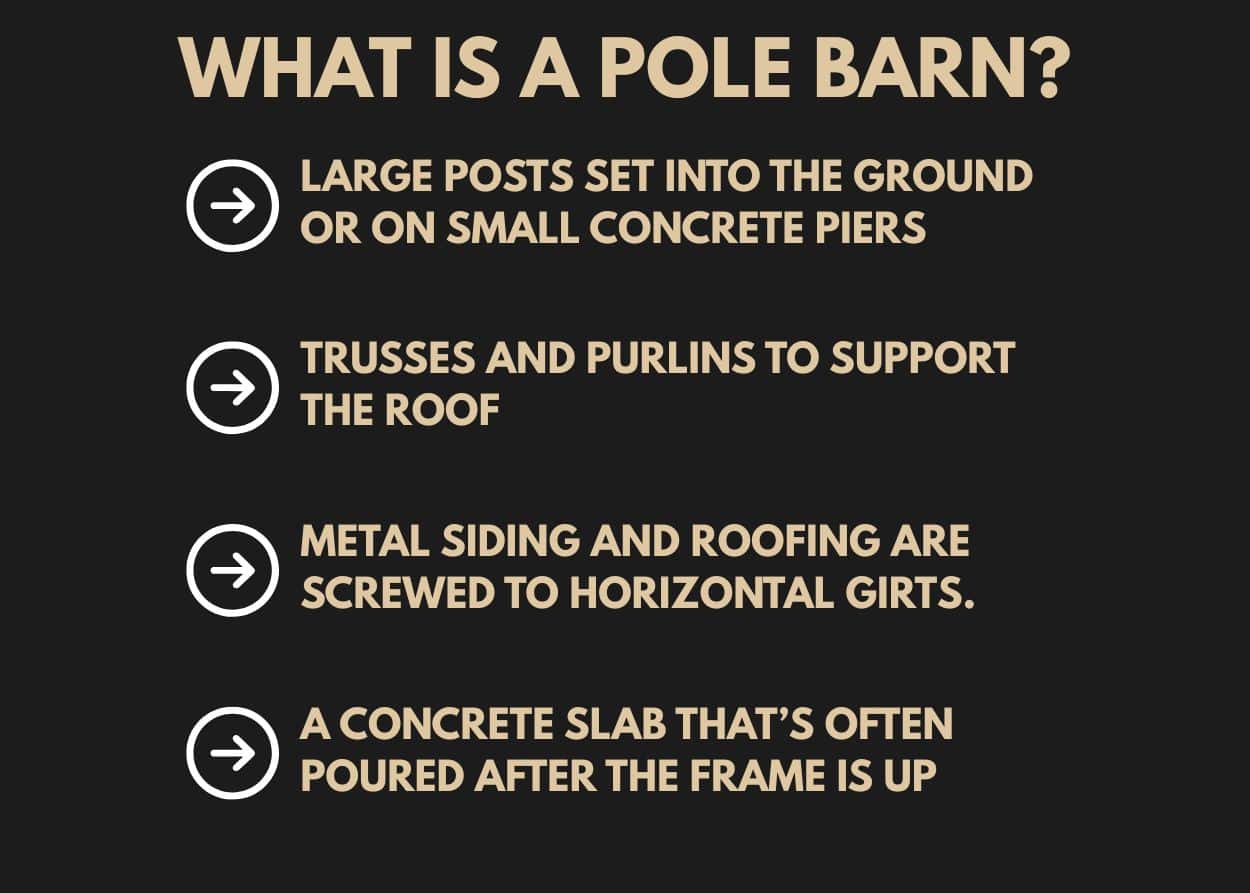
Also known as a post-frame barn, a pole barn uses:
- Large posts set into the ground or on small concrete piers
- Trusses and purlins to support the roof
- Metal siding and roofing are screwed to horizontal girts.
- A concrete slab that’s often poured after the frame is up
The posts are the main structure. The walls and slab are basically along for the ride.
Because there’s less lumber and less foundation, post-frame buildings are usually cheaper and faster to build than conventional wood framing.
That doesn’t mean that a pole barn is flimsy, though. They’re remarkably strong buildings, considering how structurally simple they are.
What is a timber frame barn?
A timber frame barn is built from massive, carefully crafted timbers that are joined together—often with traditional mortise-and-tenon joinery and wooden pegs.
Key points:
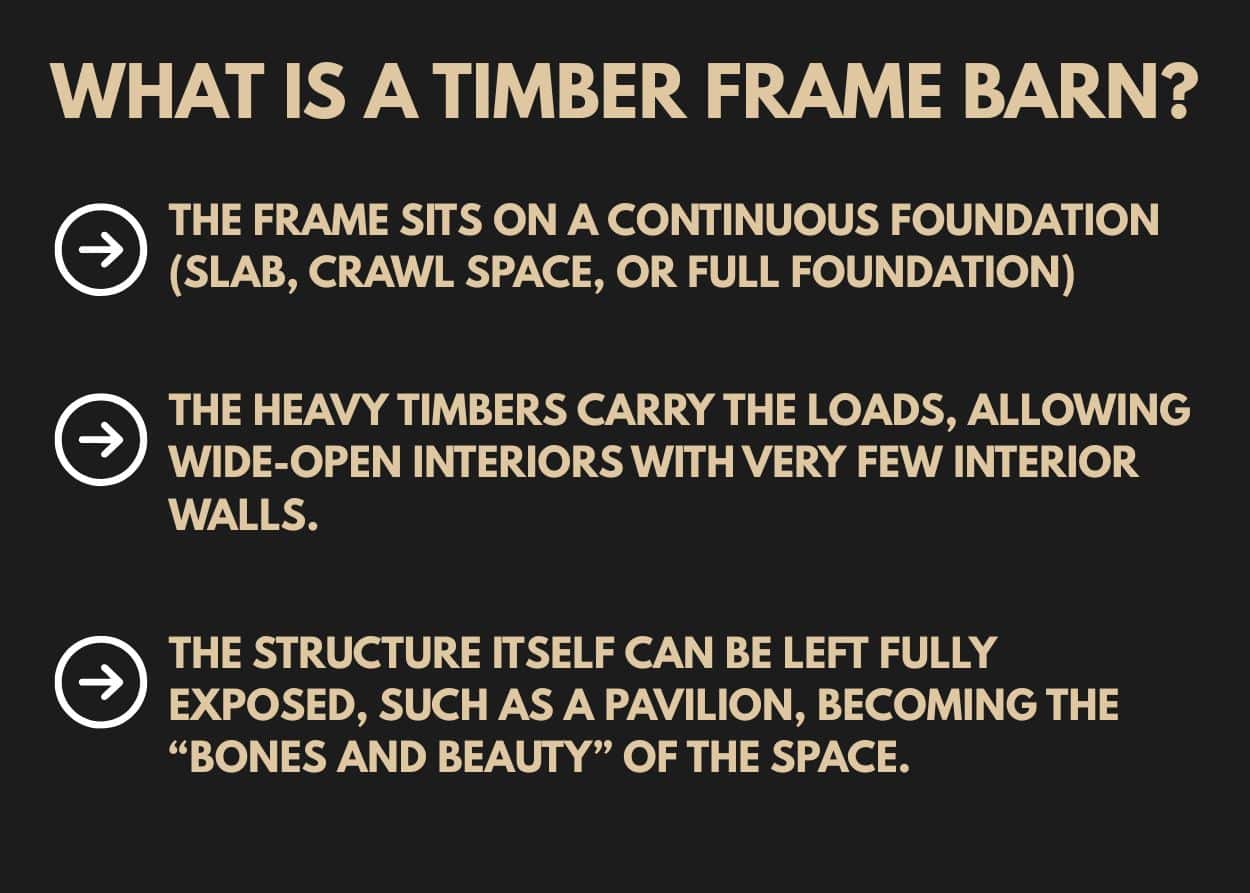
- The frame sits on a continuous foundation (slab, crawl space, or full foundation)
- The heavy timbers carry the loads, allowing wide-open interiors with very few interior walls.
- The structure itself can be left fully exposed, such as a pavilion, becoming the “bones and beauty” of the space.
Heavy timber construction is known for its strength, durability, fire resistance, and energy efficiency when properly designed.
At Tuscarora Timber Frame, this is our world—we design and cut custom timber frames for barns, homes, and commercial spaces right here in Newburg, PA, and ship nationwide.
Big-picture structural difference
Think of it like this:
- A pole barn is a cost-effective structural shell.
- A timber frame barn is a crafted structural system meant to be seen, enjoyed, and passed down.
Both are useful—they just serve different goals.
Cost Comparison: Upfront Price vs Long-Term Value
Here’s the hard truth:
Pole barns almost always win on upfront cost.
Because they use fewer materials, simpler foundations, and faster assembly, post-frame barns are often one of the least expensive ways to add covered space.
Timber frame barns, on the other hand, involve:
- Larger, higher-grade timbers
- Skilled craftsmanship—in fact, specialized training is required to master the complex art of tenon-and-mortise construction. Many timber framers are members of the Timber Framers’ Guild and have completed an apprenticeship at some point in their careers.
- More substantial foundations
So yes—a timber frame barn usually costs more to build than a similar-sized pole barn.
But that’s only half the story.
Long-term value
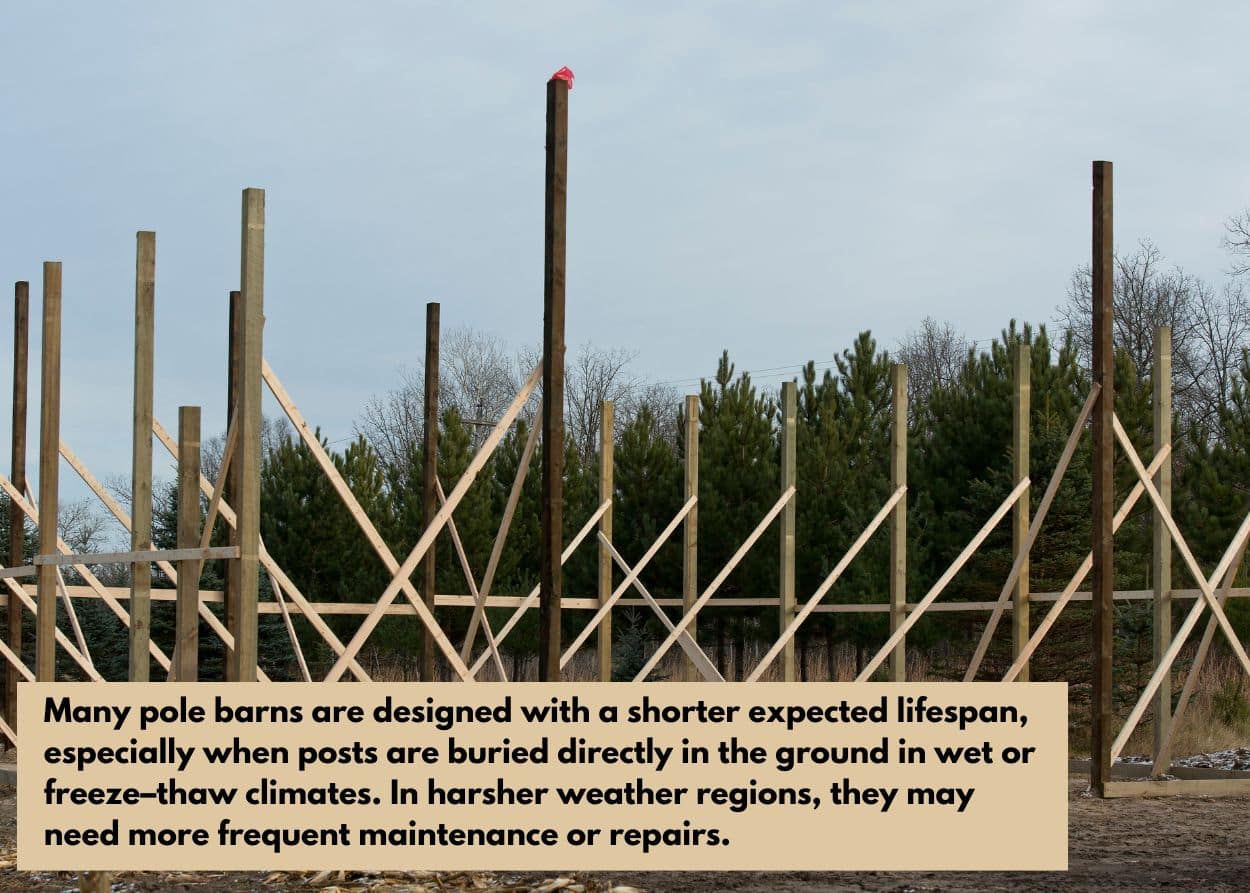
Many pole barns are designed with a shorter expected lifespan, especially when posts are buried directly in the ground in wet or freeze–thaw climates. In harsher weather regions, they may need more frequent maintenance or repairs.
Quality timber frame structures are different. When they’re cared for, timber frame buildings can last for centuries, not just decades.
That longer life means:
- Fewer complete rebuilds over your lifetime
- Higher resale appeal if the barn is finished as a living or event space
- A structure that can be adapted over time (from ag use to a shop to a guest space)
- A building that’s not just functional, but a legacy you can pass on
So, if your main goal is the lowest upfront cost, pole barns make sense.
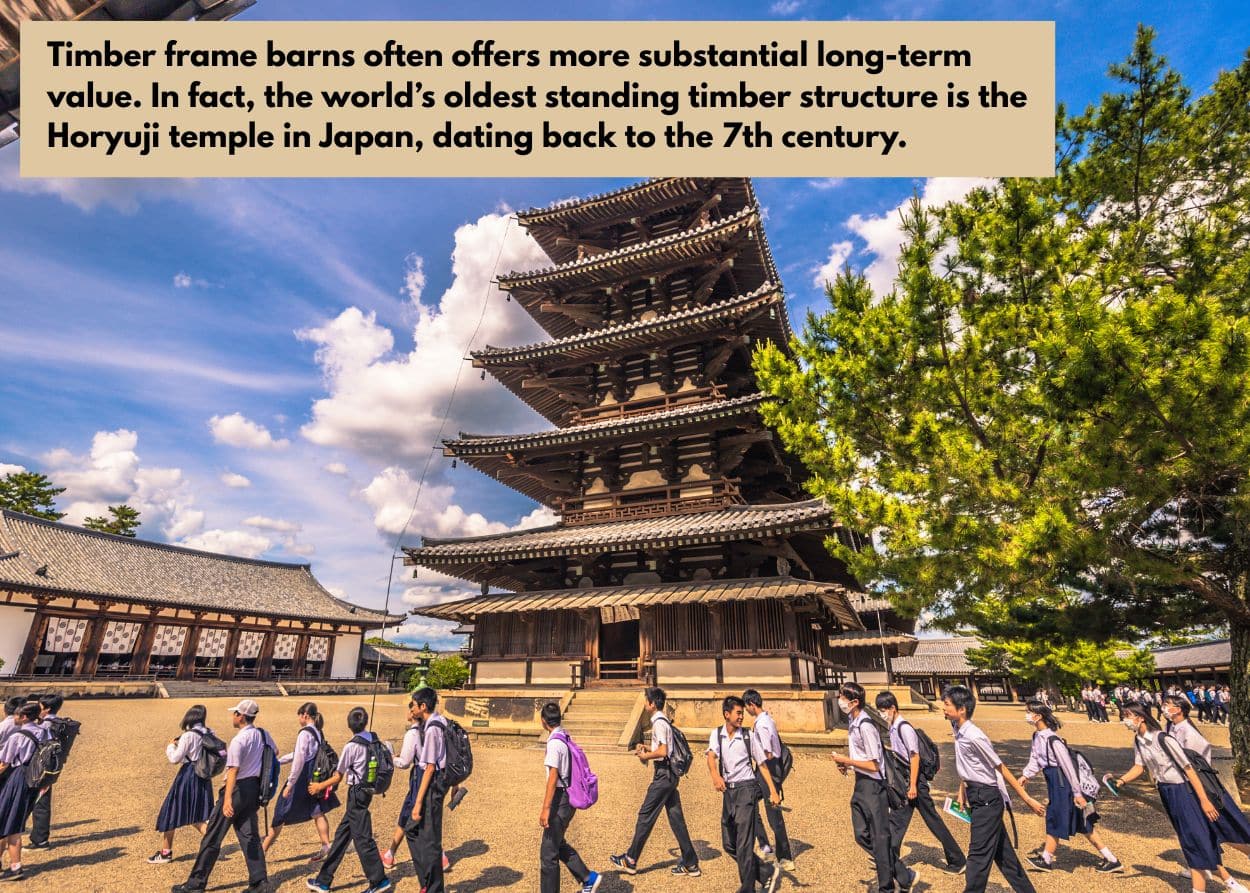
But if you’re thinking in terms of decades and generations, a timber frame barn often offers more substantial long-term value. In fact, the world’s oldest standing timber structure is the Horyuji temple in Japan, dating back to the 7th century.
Aesthetic Appeal and Customization
Here’s where the two systems really start to look different.
How pole barns usually look
Most pole barns are designed to be simple, functional buildings:
- Metal siding and roofing
- Straightforward shapes—rectangles, simple rooflines
- Interior framing is often hidden behind liner panels or left bare.
You can dress them up with:
- Wainscoting
- Cupolas
- Overhangs or porches
- Interior finishes and nicer windows
But at the end of the day, the structure itself is still a light post-frame shell.
How timber frame barns feel
Timber frame barns feel more like architecture than just storage.
You get:
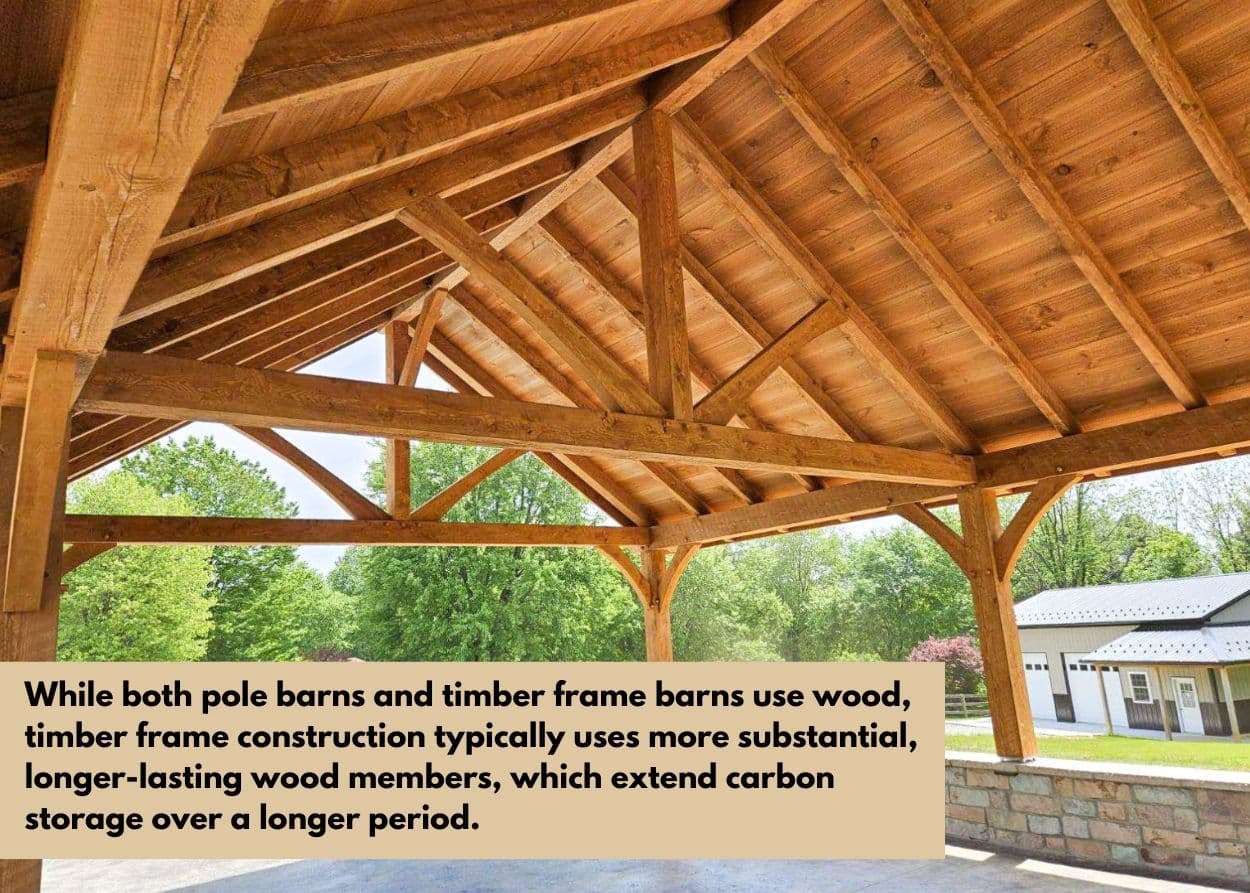
- Dramatic exposed beams and trusses
- Warm, natural wood tones
- High ceilings and open spans
- Visual character that works for event venues, hobby barns, or barn homes
Because the frame is so strong, you have the freedom to:
- Add lofts, mezzanines, or a second floor
- Mix materials (stone, glass, metal, and wood)
- Create unique rooflines, gables, and entryways.
At Tuscarora, we routinely design one-of-a-kind timber frame barns—from rustic horse barns to refined party barns and multi-use spaces that blend work and leisure.
In short:
- A pole barn prioritizes function over aesthetics
- A timber frame barn is ideal when you want the barn itself to be a showpiece.
Durability, Maintenance, and Sustainability
A barn isn’t just for now. It has to face wind, snow, rain, and Pennsylvania’s freeze–thaw cycles for years to come.
Durability and maintenance
Pole barns:
- Posts in direct soil contact can be vulnerable to moisture, rot, and insect damage if not adequately protected; however, there are ways to mitigate deterioration, such as encasing the posts in concrete.
- Metal siding and roofing can last for decades, but may dent, scratch, or fade.
- Structural life can be very good if high-quality materials and details are used—but many budget barns are not built with a 100-year life in mind.
Timber frame barns:
- Heavy timbers are naturally robust; when kept dry and well-detailed, they can stand for centuries.
- The mass of the timbers gives them excellent fire performance—they char on the outside while maintaining structural strength much longer than lightweight framing.
- Because the frame sits on a full foundation and is usually well-protected from ground moisture, you can better control the risk of rot.
Maintenance is still required—finish, flashing, and roof care matter on any barn—but timber frames are typically treated as long-term assets, not short-term solutions.
Sustainability and environmental impact
More and more property owners care about how their building choices affect the environment.
Here, wood has a major edge.
- Wood products store carbon that trees pulled from the atmosphere while they grew, making them an ideal sustainable building material.
- Studies on timber buildings show that wood-based structures often have a significantly lower carbon footprint than those built with more energy-intensive materials, especially when you consider the full life cycle.
- Organizations focused on wood design note that increasing the use of timber in buildings can significantly reduce building-related emissions and turn buildings into “carbon sinks.”
While both pole barns and timber frame barns use wood, timber frame construction typically uses more substantial, longer-lasting wood members, which extend carbon storage over a longer period.
If you care about sustainability, building for 75–150+ years with wood is a strong move.
Which Barn Type Is Right for Your Property?
Now the question you really care about:
So… which should you pick?
When a pole barn makes sense
A well-built pole barn is often the right choice if you:
- Need a simple, covered space for equipment, hay, or livestock
- Have a tight budget and want to maximize square footage per dollar.
- Need the structure up quickly for immediate use.
- Aren’t as concerned about using the space as finished living or event space later
In other words, if you picture a clean, functional building that you’re fine replacing down the road, a pole barn can be a smart, practical option.
When a timber frame barn is the better fit
A timber frame barn is usually the right call if you:
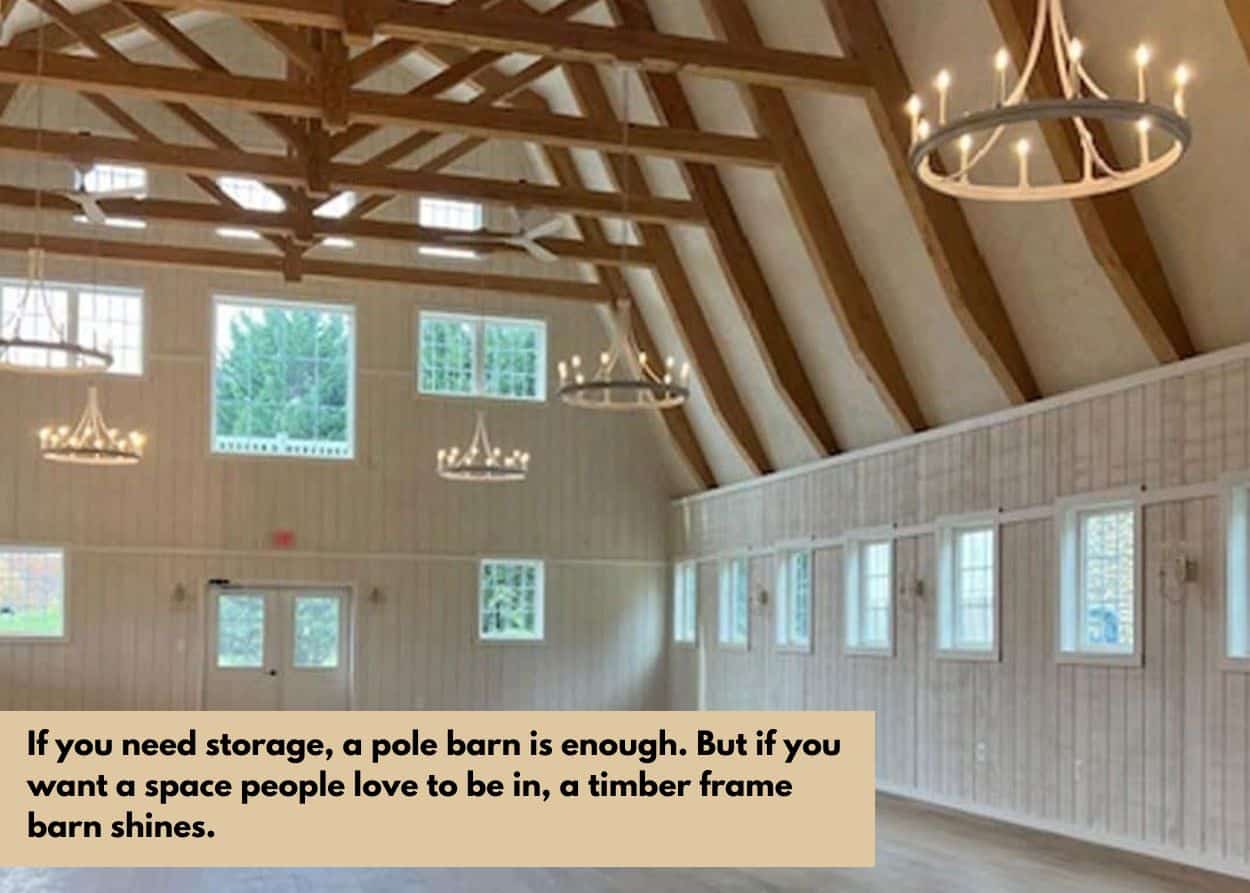
- Want a barn that doubles as a beautiful gathering space—for family, guests, events, or even a future barn home
- Care deeply about aesthetic appeal and want the barn to be a highlight of the property.
- Are you thinking in terms of generational value, not just this decade
- Prefer a structure that supports flexible use over time (shop + loft, animals + living space, event barn + storage)
- Value sustainability and the environmental benefits of long-lasting wood construction
Here’s a simple way to think about it:
If you need storage, a pole barn is enough. But if you want a space people love to be in, a timber frame barn shines.
How Tuscarora Timber Frame Can Help
At Tuscarora Timber Frame, barns are part of our story. Our roots are in Pennsylvania barn building, and over the years, we’ve blended that heritage with modern design tools and precision-cut oak timbers.
When you work with us, you’re not just getting a barn. You’re getting a custom timber frame design tailored to your land, your views, and your goals, cut by experienced artisans, ready to raise on your site.
Admittedly, a timber frame barn isn’t for everyone—so whether you’re comparing pole barns vs timber frame barns for a working farm, a private retreat, or a future event venue, we’re happy to talk through the tradeoffs for your property—not just in theory.
Ready to explore a timber frame barn? Contact us today! We’d love to help you turn that vision into a barn that looks beautiful, works hard, and stands for generations.