
Timber Frame Barn Permits in PA: Your Essential Guide to a Smooth Build
Dreaming of raising a beautiful, durable timber frame barn on your Pennsylvania property? Whether it's for farm storage, livestock, or even a unique residence, a timber frame structure is a magnificent investment.
But before you start laying your foundation, you need to navigate the maze of Timber Frame Barn Permits in PA.
Permits aren't just red tape—they’re the assurance that your barn is safe, structurally sound, and compliant with state and local law (regulated by the PA Uniform Construction Code (UCC)). Skimping on the process can lead to costly fines, forced modifications, or—worst of all—a structural failure.
At Tuscarora Timber Frame, we understand the unique permitting challenges posed by heavy timber construction across Pennsylvania’s diverse municipalities. We're here to walk you through the legal and practical steps, turning potential headaches into a smooth, successful project.







TL;DR - Timber Frame Barn Permits in Pennsylvania
- Permits are complex: With the complexity of building timber frame barns, permits are essential for safety and structural integrity.
- The Agricultural Exemption is tricky: You might be exempt from the state's UCC building permit if the barn is solely for farm storage/livestock and has no habitable space or commercial use. However, you must still file an exemption affidavit.
- Zoning is mandatory: Regardless of any UCC exemption, you must obtain local zoning approval to ensure your barn respects setbacks (which can be very large for livestock) and height restrictions.
- Partner with a Timber Frame Specialist: Timber framing is a specialized craft with unique structural requirements. Working with an expert like Tuscarora Timber Frame simplifies the entire process. They provide the code-compliant designs and required PA-licensed structural engineer stamps that municipalities demand, preventing the common "incomplete plan" rejections that cause long delays and costly redesigns.
Understanding Pennsylvania Building Code Requirements
Pennsylvania operates under the Uniform Construction Code (UCC), which adopts the International Code Council's (ICC) standards, primarily the International Building Code (IBC) and International Residential Code (IRC), with state-specific amendments.
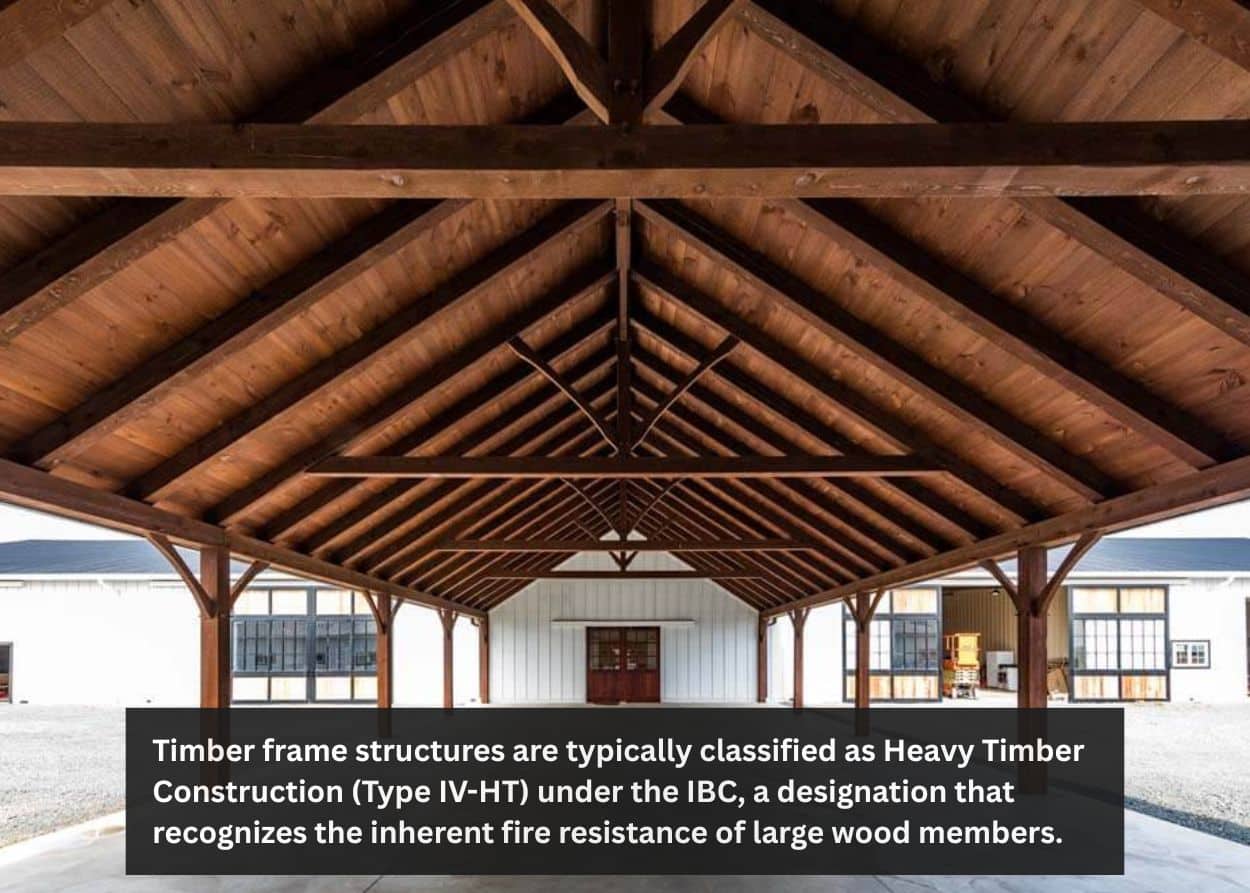
Timber frame structures are typically classified as Heavy Timber Construction (Type IV-HT) under the IBC, a designation that recognizes the inherent fire resistance of large wood members.
The Critical UCC Exemption for Agricultural Buildings
The single most important rule to understand is the Agricultural Building Exemption under the PA UCC.
A building permit is generally not required for a structure that meets the PA UCC definition of an agricultural building:
A structure utilized to store farm implements, hay, feed, grain or other agricultural or horticultural products or to house poultry, livestock or other farm animals.
When the Exemption is VOID:
The exemption is immediately lost, and a full UCC building permit is required if the barn includes:
- Habitable Space: Any area designed for living, sleeping, cooking, or bathing (e.g., a caretaker's apartment).
- Processing or Packaging: Spaces where agricultural products are treated, processed, or packaged (e.g., a commercial bottling area).
- Public Occupancy: Any space used to conduct business or open to the general public (e.g., a wedding venue, retail shop, or office space).
Here’s what this means for you: If your timber frame barn is a dedicated storage or livestock building, you may be exempt from the UCC permit, but you must still file an exemption affidavit with your municipality.
Zoning Considerations Before You Build
Even if your timber frame barn is exempt from the UCC building permit, local zoning permits are almost always mandatory. Zoning regulates how you use your land, ensuring your barn is appropriately sized and placed.
- Setback Rules: This is the distance your barn must be from your property lines (front, side, and rear). These rules vary widely across townships and are based on the barn's proposed use.
- Residential Accessory Barns: Often have minimum setbacks between 7 to 15 feet from side and rear lines, and strict height limitations (often between 18 to 28 feet max).
- Agricultural Barns (Housing Livestock): Many municipalities impose much stricter, larger setbacks, often requiring 100 feet or more from property lines, wells, or water sources, to comply with the Nutrient Management Act (NMA), especially if the barn houses livestock or stores manure.
- Land Use Classification: Your zoning district (e.g., AG, R-1, R-5) determines if your timber frame barn is even a permitted use and sets limits on the structure's size relative to your lot size.
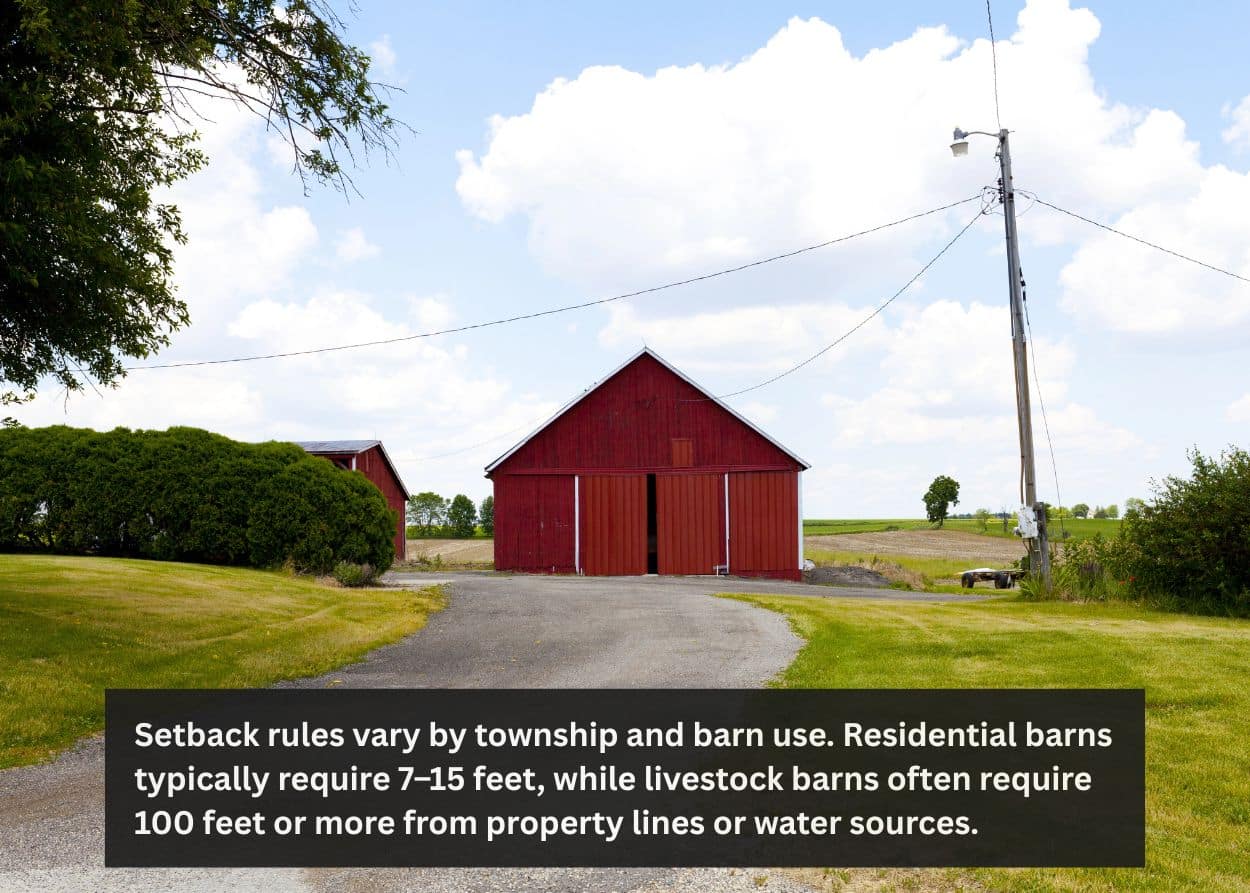
Action Item: Before any design work begins, contact your township's Zoning Officer to confirm the exact setbacks and height restrictions for a timber frame barn on your specific property.
When a Timber Frame Barn Absolutely Requires a Permit
A full UCC building permit is required if your timber frame barn falls into any of these categories:
- Change of Use: If the barn contains a workshop, office, studio, or retail space.
- Plumbing/Mechanical: If the barn includes a bathroom, kitchen, wash station, or heating/ventilation systems that connect to utilities.
- Electrical: If you install an extensive electrical system, lighting, or specialized wiring for commercial use. Basic farm electrical hookups may be exempt, but confirmation from your local code official is required.
- Habitable Space: Any finished interior space intended for occupancy (e.g., a loft designed as a guest suite).
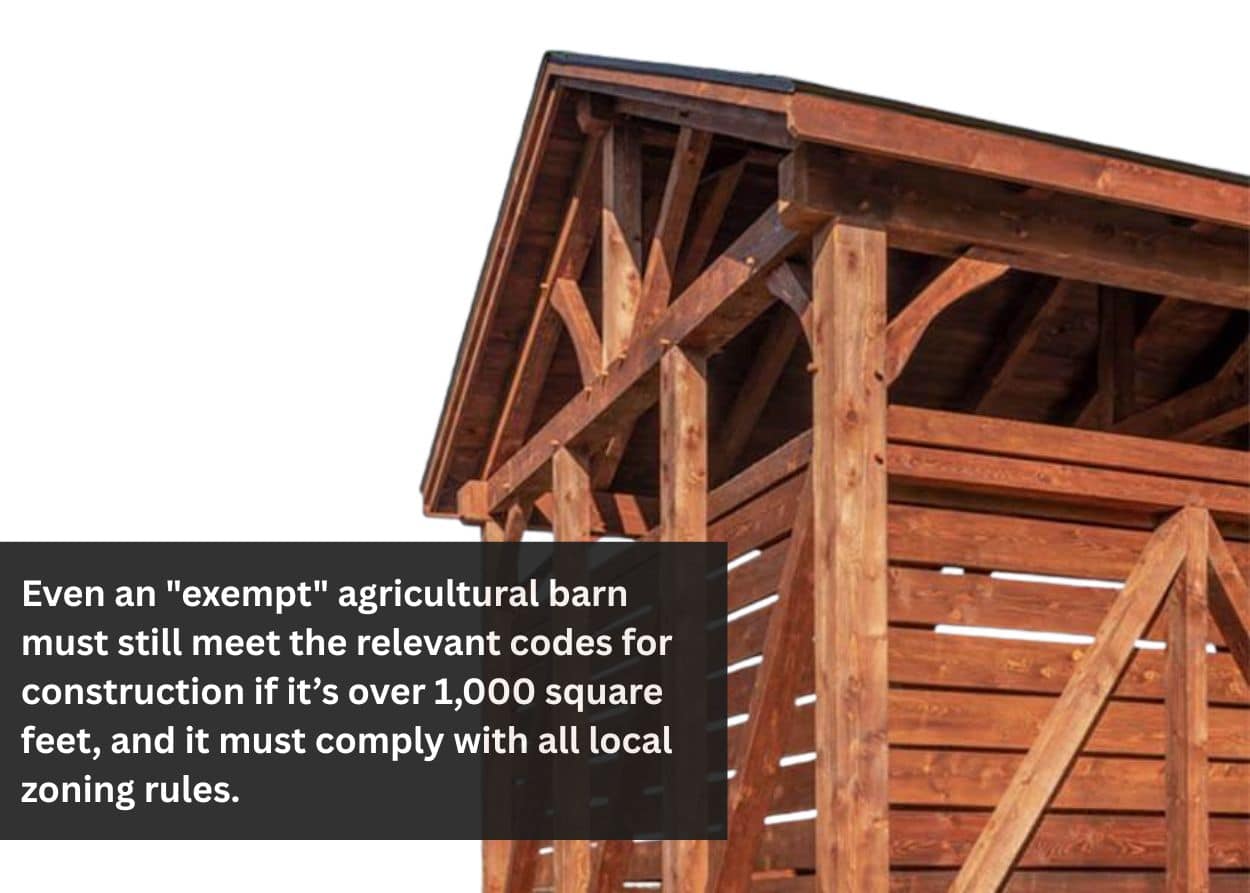
Remember: Even an "exempt" agricultural barn must still meet the relevant codes for construction (e.g., structural strength, fire safety for materials) if it’s over 1,000 square feet, and it must comply with all local zoning rules.
How the Permit Application Process Works
If a full UCC permit is required, the process will follow these steps (administered by either the municipality or a third-party agency like PMCA):
- Preparation of Plans: This is the most critical step. Your plans must include detailed elevations, cross-sections, foundation design, and a comprehensive code analysis (indicating the snow load, wind load, and seismic design criteria).
- Required Certifications: Due to the complexity of timber framing, the construction documents must bear the seal and signature of a licensed design professional (typically a structural engineer or architect) showing the system is safe and code-compliant.
- Submission: Submit the completed UCC Application and three (3) full sets of sealed construction drawings (or an electronic submittal) to the appropriate code enforcement office.
- Review and Approval: Allow approximately 15 to 20 business days for the initial review. Any missing information or non-compliance issues will require plan revisions, which restart the review clock.
- Inspections: Once the permit is issued, your builder must schedule mandatory inspections at these critical stages of construction:
- Foundation/Footing Inspection: Before pouring concrete.
- Framing Inspection: After the timber frame is raised, but before any wall sheathing or permanent roofing is applied.
- Rough-In Inspections: For electrical, plumbing, or mechanical systems (if applicable).
-
- Final Inspection: Upon project completion, leading to the Certificate of Occupancy (CO), which allows you to legally use the structure.
Common Mistakes to Avoid During the Permitting Process
Permit delays often stem from a few predictable issues, which can be easily avoided:
- Incomplete Plans: Submitting hand-drawn sketches or incomplete plans lacking necessary structural details (like timber sizing, joint connections, and foundation loads).
- Missing Engineer Stamps: Failure to include the required seal of a PA-licensed engineer on all structural drawings, especially crucial for unique heavy timber designs.
- Ignoring Zoning: Submitting a plan that violates local setback requirements, resulting in immediate rejection and requiring a costly redesign of the entire barn.
- Unclear Project Scope: Failing to specify the exact use of the building (e.g., calling it a "barn" when it includes an internal apartment), causing review confusion or requiring retroactive permitting.
How Tuscarora Timber Frame Simplifies the Permit Process
Timber framing is a specialized craft, and its unique engineering requires specialized permitting expertise. We don't just build—we manage the entire process from design to final approval.
Our team at Tuscarora Timber Frame helps ensure a smooth, compliant project by:
- Code-Compliant Design: We are experts in the IBC's requirements for Heavy Timber construction, ensuring your design meets all snow, wind, and lateral bracing requirements specific to your PA location.
- Licensed Engineering: Our comprehensive design package includes sealed, engineer-stamped drawings that satisfy the toughest municipal requirements the first time.
- Zoning Pre-Checks: We work with you early to confirm your land use classification and required setbacks, ensuring the design fits the site before plans are finalized.
- Documentation Management: We handle the preparation and submission of all required documents, including the Agricultural Exemption Affidavit if applicable, reducing your paperwork burden.
Ready to Build Your Timber Frame Barn the Right Way?
Navigating Timber Frame Barn Permits in PA doesn't have to be a confusing, stressful experience. With the right design and documentation, you can confidently move forward with a beautiful, compliant structure that will stand for centuries.
If you're ready to start your barn project and want professional guidance from initial design through final inspection, don't leave compliance to chance.
Contact Tuscarora Timber Frame today for professional consultation and turnkey barn-building services across Pennsylvania. We’re ready to help you bring your vision to life!